


0
Global financial markets suffered a sharp sell-off on Tuesday after renewed trade tensions between the United States and Europe rattled investor confidence. Concerns escalated after Donald Trump doubled down on threats to impose tariffs on several European nations unless they support Washington’s push for control over Greenland.
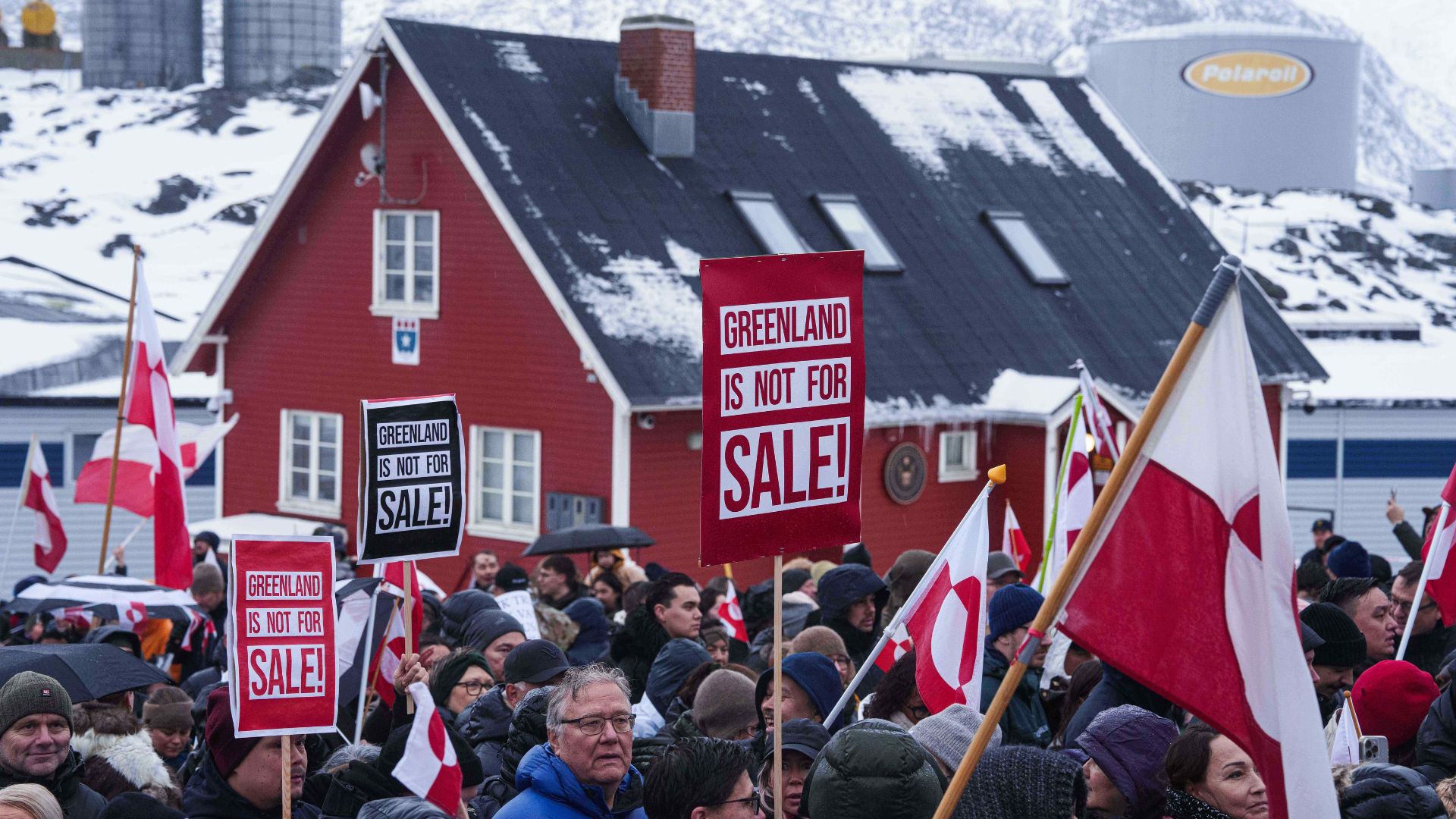
The warning, first issued over the weekend, targets seven European Union countries along with the United Kingdom. Speaking at a White House briefing, the president declined to clarify how far he would go to achieve his objective, responding simply, “You’ll find out.” His refusal to rule out the use of force further unsettled markets.
U.S. equities posted their steepest losses in months. The S&P 500 fell roughly 2.1%, marking its worst session since October and wiping out gains accumulated earlier in the year. The Nasdaq Composite dropped more than 2.4%, pushing it into negative territory for 2026, while the Dow Jones Industrial Average slid nearly 870 points.
In total, more than $1.2 trillion in market value was erased from U.S. stocks as investors reassessed geopolitical risks and the possibility of a renewed transatlantic trade war.
Europe and volatility follow Wall Street lower
European markets extended losses for a second consecutive day. Germany’s DAX declined 1%, the UK’s FTSE 100 slipped 0.7%, and Italy’s FTSE MIB fell 1.1%. The STOXX Europe 600 closed lower by 0.7%, with most sectors ending in the red.
Market anxiety was reflected in the CBOE Volatility Index, which climbed to its highest level since mid-November.
Safe havens rally as bonds sell off
As equities weakened, investors rotated into traditional safe-haven assets. Gold surged more than 2% to fresh record highs, while silver extended its strong run for the year, now up more than 30%. The rally in silver has been so intense that the U.S. Mint temporarily paused sales of certain collector coins to reprice them.
At the same time, U.S. government bonds were sold aggressively, pushing yields higher. The 10-year Treasury yield reached its highest level since August, while 30-year yields climbed to levels not seen since September. Rising yields typically translate into higher borrowing costs for mortgages, auto loans, and consumer credit.
The ICE U.S. Dollar Index fell nearly 0.8%, putting it on track for its sharpest decline since April, when earlier tariff announcements triggered broad market turmoil.
Political risks add fuel to the fire
Additional uncertainty emerged after Japan’s prime minister called snap elections, further unsettling global bond markets. Investors are also closely watching the U.S. Supreme Court, which may soon rule on the legality of Trump’s broad tariff powers — a decision that could significantly shape future trade policy.
Meanwhile, European officials announced plans for an emergency summit later this week to discuss retaliation. According to EU sources, counter-tariffs exceeding $100 billion are already prepared, and some leaders are considering deploying the bloc’s anti-coercion mechanism, often referred to as the “trade bazooka.”
‘Sell America’ narrative resurfaces
Strategists warn that the latest developments echo the “sell America” trade seen during previous tariff escalations. Analysts note that investors are once again questioning the reliability of the U.S. as a stable trade partner, prompting a shift toward commodities and international assets.
Executives attending the World Economic Forum in Davos also voiced concern. Sergio Ermotti said volatility could worsen if multiple geopolitical risks spiral simultaneously, warning that markets may struggle to find stability in the near term.
Despite the turmoil, Treasury Secretary Scott Bessent sought to calm markets, urging investors not to overreact and insisting the administration has a clear strategy in place.
For now, markets remain highly sensitive to political signals, with investors bracing for further volatility as trade rhetoric continues to dominate the global outlook.
Disclaimer: The information contained herein (1) is proprietary to BCR and/or its content providers; (2) may not be copied or distributed; (3) is not warranted to be accurate, complete or timely; and, (4) does not constitute advice or a recommendation by BCR or its content providers in respect of the investment in financial instruments. Neither BCR or its content providers are responsible for any damages or losses arising from any use of this information. Past performance is no guarantee of future results.
Lebih Liputan



Pendedahan Risiko:Instrumen derivatif diniagakan di luar bursa dengan margin, yang bermakna ia membawa tahap risiko yang tinggi dan terdapat kemungkinan anda boleh kehilangan seluruh pelaburan anda. Produk-produk ini tidak sesuai untuk semua pelabur. Pastikan anda memahami sepenuhnya risiko dan pertimbangkan dengan teliti keadaan kewangan dan pengalaman dagangan anda sebelum berdagang. Cari nasihat kewangan bebas jika perlu sebelum membuka akaun dengan BCR.
BCR Co Pty Ltd (No. Syarikat 1975046) ialah syarikat yang diperbadankan di bawah undang-undang British Virgin Islands, dengan pejabat berdaftar di Trident Chambers, Wickham’s Cay 1, Road Town, Tortola, British Virgin Islands, dan dilesenkan serta dikawal selia oleh Suruhanjaya Perkhidmatan Kewangan British Virgin Islands di bawah Lesen No. SIBA/L/19/1122.
Open Bridge Limited (No. Syarikat 16701394) ialah syarikat yang diperbadankan di bawah Akta Syarikat 2006 dan berdaftar di England dan Wales, dengan alamat berdaftar di Kemp House, 160 City Road, London, City Road, London, England, EC1V 2NX. Entiti ini bertindak semata-mata sebagai pemproses pembayaran dan tidak menyediakan sebarang perkhidmatan perdagangan atau pelaburan.


 English
 简体中文
简体中文
 繁體中文
繁體中文
 Bahasa
Melayu
Bahasa
Melayu
 Tiếng
Việt
Tiếng
Việt
 ไทย
ไทย
 日本語
日本語
 한국어
한국어
 ភាសាខ្មែរ
 español